Oil & Energy
NNPC Rejects NISO's Gas Blame as Blackouts Deepen
Lagos, 9 November 2026 · Gopexly Desk · Published 9 November 2026 at 17:00 · 5 min read
 TRANSCORP
 GEREGU

NNPC Limited says its gas pipeline network has no constraints that explain Nigeria's falling electricity supply, and that gas production is up about 10% so far in 2026. That puts it at odds with the Nigerian Independent System Operator (NISO), which said on 5 November that limited gas supply to thermal plants and low water in hydro reservoirs were behind the decline. The clash leaves households and businesses with longer outages and no agreed explanation. NNPC has called for a joint review of operating data across the gas-to-power chain.
What NNPC said
In a statement signed by Chief Corporate Communications Officer Andy Odeh, NNPC said:
"NNPC Limited confirms that gas transportation network operated by its subsidiary, NNPC Gas Infrastructure Company Limited (NGIC), remains available to support deliveries to power generating stations Nationwide without any constraints. NGIC's operational records do not indicate transportation-related constraints within its network that explain the current decline in electricity generation."
It added that the federal gas development agenda "has led to about 10% growth in gas production volumes 2026 year to date" and that "gas supply availability is therefore not a challenge."
NNPC was careful about the limits of its claim. It said its clarification concerns the pipeline network only. Gas production, commercial supply contracts and actual deliveries to individual power plants "must be assessed separately". A full assessment should also look at whether generating units are available and ready, maintenance schedules and how much gas plants actually take.
What NISO said
NISO's 5 November statement, reported by Punch and Nairametrics, said the decline was "primarily attributed to constraints in gas supply to thermal power generating stations and reduced output from hydroelectric power stations." It said lower generation had reduced allocations to distribution companies (DisCos), leading to "reduced hours of electricity supply and increased load shedding." It said it was working to diversify the grid's energy mix.
How bad is supply?
BusinessDay reported that at 9 a.m. on Friday, grid generation was 1,232.10 megawatts, reported by just eight of 33 listed plants. The other 25 showed zero output. The eight were Delta (333MW), Jebba hydro (247MW), Omotosho (182MW), Zungeru (160MW), Egbin (111MW), Geregu (107MW), Olorunsogo NIPP (90.10MW) and Trans-Amadi (2MW).
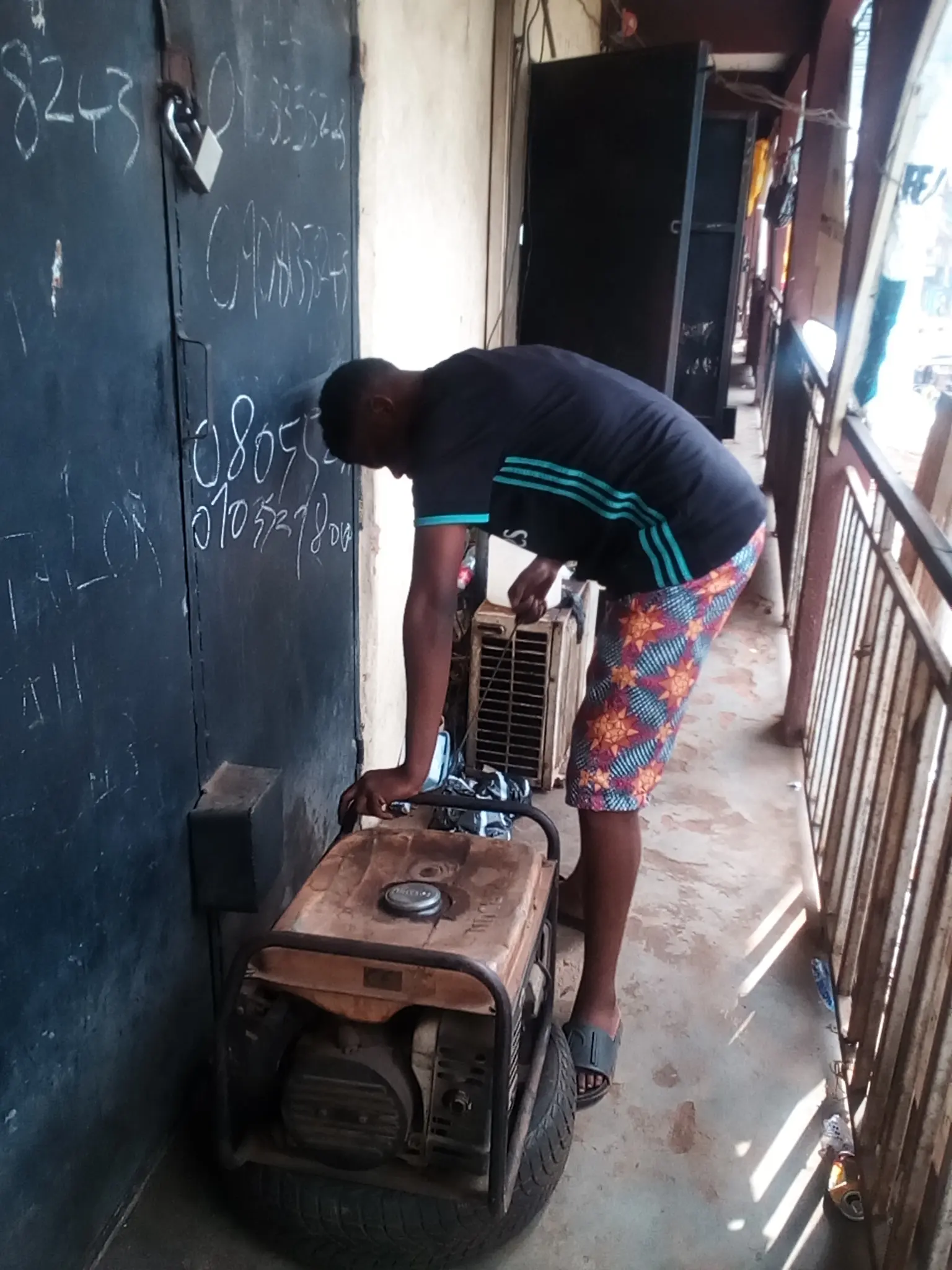
Punch says the shortfall comes amid intense heat, with the Nigerian Meteorological Agency having confirmed a strong El Niño in August 2026. That raises demand for fans and cooling just as supply falls, pushing more homes and small businesses onto petrol and diesel generators.
A chain of blame
This is the second public dispute over outages in a week. Nairametrics reported that the Transmission Company of Nigeria (TCN) accused Ikeja Electric of misleading customers about feeder outages in Lagos:
- Of interruptions on feeders supplying Ikeja Electric on 1 and 2 November, TCN said 68% came from frequency-control load shedding caused by low generation.
- 26% were linked to Ikeja Electric not following load allocations, or to faults and maintenance on its network.
- 6% were TCN-planned maintenance, switching or line limits.
- Of 46 interruptions on the 33kV feeders in Ikeja Electric's notice, TCN blamed 29 on low generation, 14 on the DisCo and three on scheduled TCN work.
TCN cited Section 67 of the Electricity Act 2023, which it says makes NISO responsible for determining the causes of grid disturbances.
BusinessDay adds a wider context: Nigeria's gas flaring has risen for a third straight year, according to regulator data, and the World Bank's flaring tracker lists Nigeria among the nine largest flaring countries in 2025. The point is that gas exists, but getting it processed, sold and delivered to power plants is the problem.
Where sources differ
- Gas: shortage or not? NISO blames limited gas availability. NNPC says pipeline transport is unconstrained and production is up, but it does not vouch for contracts or deliveries to each plant. Both statements can be partly true. A plant can go short of gas because of unpaid invoices or supply contracts even if pipelines have spare capacity.
- Statement date. Nairametrics and BusinessDay date NNPC's statement 6 November. Punch says it was issued on Saturday (7 November), and NNPC's website dates it 7 November. The wording is the same.
- Hydro. NISO cites low reservoir inflows, yet BusinessDay's Friday snapshot shows Jebba and Zungeru among the few plants producing, while Kainji and Shiroro showed zero. A single morning snapshot does not settle the question.
What this means for investors
- Listed power and gas names. Transcorp said in its 9M 2026 results release that lower revenue reflected reduced power evacuation at Transcorp Power, as industry-wide transmission and gas supply constraints limited output. Geregu appears in Friday's list of the few plants producing. Weak grid supply affects what generators can sell, and the payment chain affects what they collect. This is context, not a recommendation.
- Costs for companies. Manufacturers and banks that run on diesel or petrol generators face higher operating costs when grid supply falls. Watch for this in Q4 commentary.
- Household budgets. More generator hours mean more spending on fuel. That is part of why food and transport costs remain sensitive to power.
- Watch next: whether the coordinated review NNPC proposed happens, and whether NISO or the regulator publishes plant-by-plant gas delivery data.
This is for information only and is not investment advice.
FAQ
Why is power supply poor in Nigeria in November 2026?
NISO blames limited gas supply to thermal plants and low hydro reservoir levels. NNPC disputes the gas part, saying its pipelines are unconstrained and production is up about 10% this year.
What did NNPC say about gas for power plants?
That the NGIC pipeline network is available without constraints, but that production, commercial contracts, deliveries to each plant and plant readiness need to be checked separately.
How much power is the grid producing?
BusinessDay reported 1,232.10MW at 9 a.m. on Friday, from eight of 33 listed plants. The other 25 showed zero output.
Sources
- NNPC, "Press Statement: NNPC Confirms Gas Supply & Network Availability" (7 Nov 2026)
- Nairametrics, "Power shortages: NNPC counters NISO's gas shortage claims, reports 10% production growth" (8 Nov 2026)
- Punch, "Gas supply not responsible for low power generation, NNPC insists"
- BusinessDay, "NNPC disputes grid operator's gas blame for Nigeria's power slump"
- Punch, "Gas shortages, low water levels reduce power generation – NISO" (5 Nov 2026)
- BusinessDay, "Gas-rich Nigeria watches flaring soar as households endure darkness" (9 Nov 2026)
- Transcorp, 9M 2026 results press release (26 Oct 2026)
This note is for education. It is not a recommendation to buy or sell any share.
Tags: NNPC, Power, Gas, NISO, Electricity