Naira & FX
CBN, NNPC Sign Deal to Boost FX Inflows: What It Means
Lagos, 19 November 2026 · Gopexly Desk · Published 19 November 2026 at 06:00 · Updated 19 November 2026 at 08:34 · 6 min read

The Central Bank of Nigeria (CBN) and NNPC Limited signed a Memorandum of Understanding (MoU) on Wednesday, 18 November 2026, to work more closely on foreign exchange inflows, oil revenue management and energy financing. CBN Governor Olayemi Cardoso and NNPC Group Chief Executive Bayo Ojulari signed the agreement at the CBN headquarters in Abuja.
The deal matters because oil and gas still earn most of Nigeria's dollars. How quickly and openly those dollars reach the official system affects the naira, the country's reserves and the money shared to governments every month.
What the agreement covers
According to Business Post, ThisDay, TheCable and NNPC's own press release, the MoU covers:
- Oil revenue settlement: better management and settlement of oil and gas proceeds into the Federation Account and other government accounts.
- FX inflows: removing obstacles so that export proceeds flow into the Nigerian economy.
- Energy financing: helping NNPC raise capital on the strength of its own balance sheet and assets, with CBN guidance.
- Gas development: using the CBN's "convening power" to attract international financial institutions to fund Nigeria's gas projects.
- Payments and approvals: payment automation and faster operational approvals.
- Cybersecurity and compliance: sharing threat alerts and aligning with CBN regulations.
No naira or dollar amounts were attached to the agreement in any of the reports we read. It is a framework for cooperation, not a new loan or a fresh inflow of money.
What the CBN said
Cardoso said the MoU does not create a new relationship. "The two institutions have worked together for decades. What distinguishes today's event is the formalisation of that existing collaboration," he said, as quoted by TheCable.
He said the CBN, as custodian of NNPC's key operational foreign currency accounts, plays an important role in the timely and transparent remittance of oil and gas proceeds. "Our continued collaboration in efficient account management, funds transfer and liquidity support directly contributes to macroeconomic stability by ensuring the availability of revenue to achieve fiscal mandates and predictable inflows into the foreign exchange markets," he said, according to ThisDay and NNPC.
ThisDay reported that NNPC, other oil companies and regulators had been meeting with the CBN regularly, sometimes every two weeks, to resolve operational problems.
What NNPC said
Ojulari said NNPC's change into a commercial company under the Petroleum Industry Act required a more structured relationship with the monetary authority. "Nigeria's energy sector and its financial system are not separate stories. They are one story," he said, according to TheCable.
He said NNPC faced serious financial problems when the new board and management took over in April 2025, including weak liquidity, troubled projects, large loans and refinery difficulties. Management reviewed planned asset sales and restructured loans in response, ThisDay reported.
NNPC's Group Chief Financial Officer, Adedapo Segun, said the agreement would replace the old practice of handling financial issues through irregular, deal-by-deal arrangements. He said NNPC would align its domestic payments, contractor settlements and foreign exchange conversions with CBN rules to support naira stability and reduce dollarisation. Joint steering and working committees will track progress, with NNPC Group Treasurer John Etukudo overseeing implementation.
Both sides linked the deal to NNPC's goal of raising crude oil output from about 1.8 million barrels per day to 3 million.
Reserves and the naira: where things stand
CBN Deputy Governor (Operations) Emem Usoro said at the event that Nigeria's gross external reserves had exceeded $55 billion, supported by higher oil output and diaspora remittances, Business Post reported.
Other figures differ slightly. Vanguard reported on Thursday that CBN interventions had trimmed reserves by about $390 million from a late-October peak of $55.26 billion, which would put them near $54.9 billion. The difference may come from timing or from which daily figure each source used. We have not seen a CBN reserve figure for 18 November to settle it.
On the naira, the CBN's official closing rate on Wednesday was N1,363.23 per dollar, according to Vanguard. Early on Thursday, the Nigerian Foreign Exchange Market (NFEM) rate was about N1,350.50. In the parallel market, dealers in Lagos and Abuja quoted selling rates of about N1,445 to N1,468, a gap of roughly N90 to N105 from the official rate. Parallel market rates are informal and vary by dealer and location.
The background
This is not the first step to route NNPC's dollar earnings through the CBN. In February 2024, the NNPC board approved moving a significant portion of the company's dollar revenues and banking transactions to the CBN, Business Post noted.
Reuters, via CNBC Africa, said the Tinubu administration has sought to give the CBN more visibility over oil revenue flows. Ojulari also told Reuters earlier this month that NNPC is seeking to list on the Nigerian Exchange, with the main aim of improving transparency and governance.
What it means for you
- Naira watchers: More predictable oil dollar inflows could help the CBN manage the exchange rate. But the MoU itself brings no new dollars. Results will show up, if at all, over months.
- Federation Account: Better remittance of oil proceeds feeds into the monthly FAAC payout to governments. October's FAAC shows several oil revenue lines fell.
- Investors: Oil companies, banks with oil exposure and holders of naira assets all depend on steady FX supply. Watch the reserves data, NFEM rates and the gap with the parallel market.
- NNPC listing: A more transparent financial setup could matter if NNPC moves ahead with a listing on the NGX. No timeline has been confirmed.
FAQs
What did the CBN and NNPC sign? A Memorandum of Understanding signed on 18 November 2026 to cooperate on FX inflows, oil revenue management, energy financing, payment automation and cybersecurity.
Will the CBN-NNPC deal strengthen the naira? It aims to make oil dollar inflows more predictable, which can support the naira over time. It does not bring in new money by itself, and no amounts were announced.
How much are Nigeria's external reserves? A CBN deputy governor said reserves exceeded $55 billion. Vanguard put them about $390 million below the late-October peak of $55.26 billion.
Sources
- Business Post, "CBN, NNPC Sign Deal to Boost FX Inflows, Energy Funding" (18 Nov 2026)
- ThisDay, "CBN, NNPCL Seal Deal to Unlock Oil Revenue, Boost Forex Inflows, Economic Stability" (19 Nov 2026)
- TheCable, "CBN, NNPC sign MoU to strengthen FX inflows, energy financing" (18 Nov 2026)
- Reuters via CNBC Africa, "Nigeria's central bank, NNPC sign deal to support forex inflows, energy funding" (18 Nov 2026)
- NNPC, "Press Release: NNPC, CBN Sign Deal To Enhance Energy Financing" (19 Nov 2026)
- Vanguard, "Dollar to Naira exchange rate today, November 19, 2026" (19 Nov 2026)
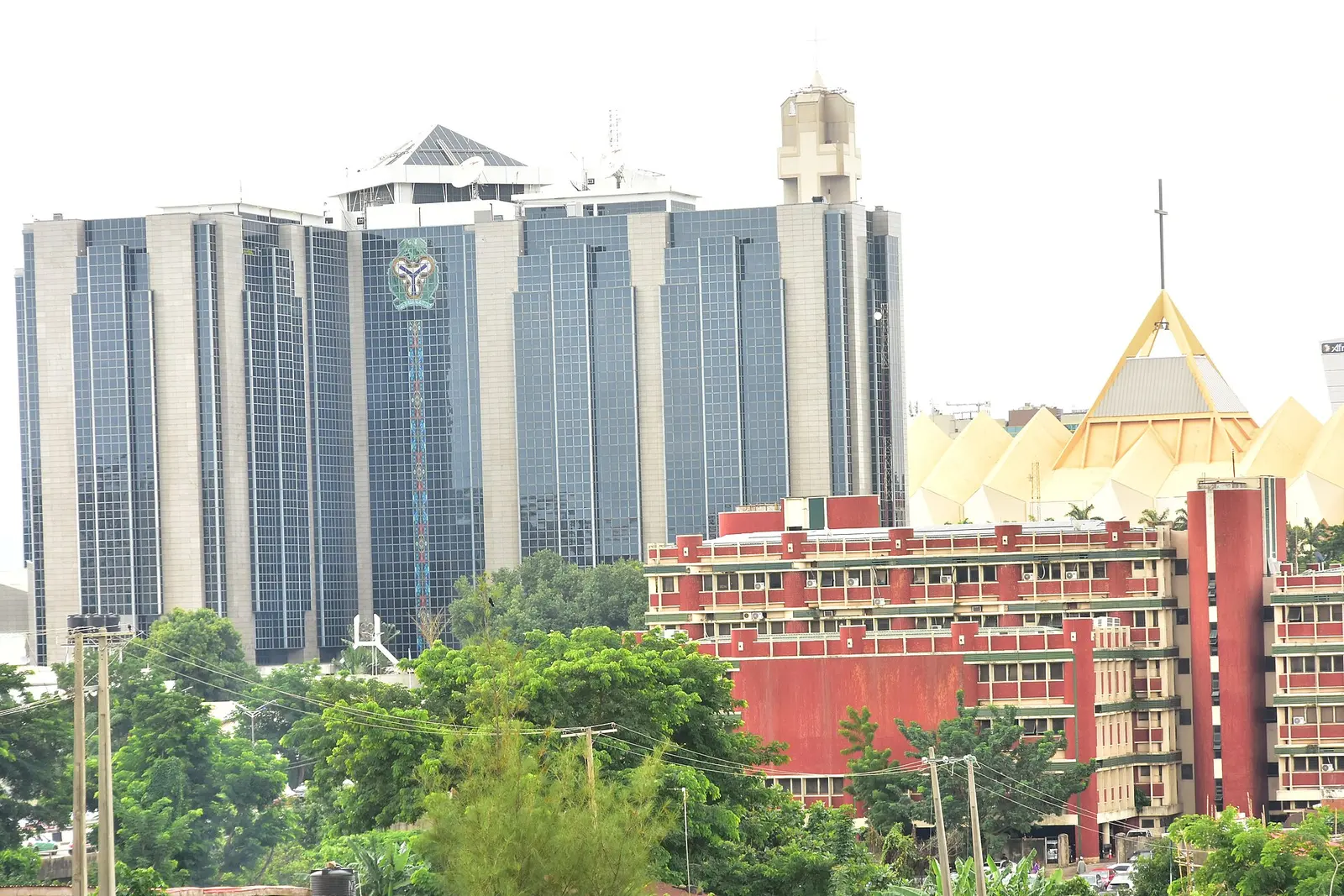
Cover photo: NNPC Towers, Abuja. Jummy001 / Wikimedia Commons, CC BY-SA 4.0.
This is for information only and is not investment advice.
This note is for education. It is not a recommendation to buy or sell any share.
Tags: CBN, NNPC, Naira, FX Inflows, External Reserves, Oil Revenue