LatestEconomy
Nigeria Pitches $78.5bn in Projects, Targets 7% Growth
Lagos, 18 October 2026 · Gopexly Desk · Published 18 October 2026 at 11:00 · 5 min read
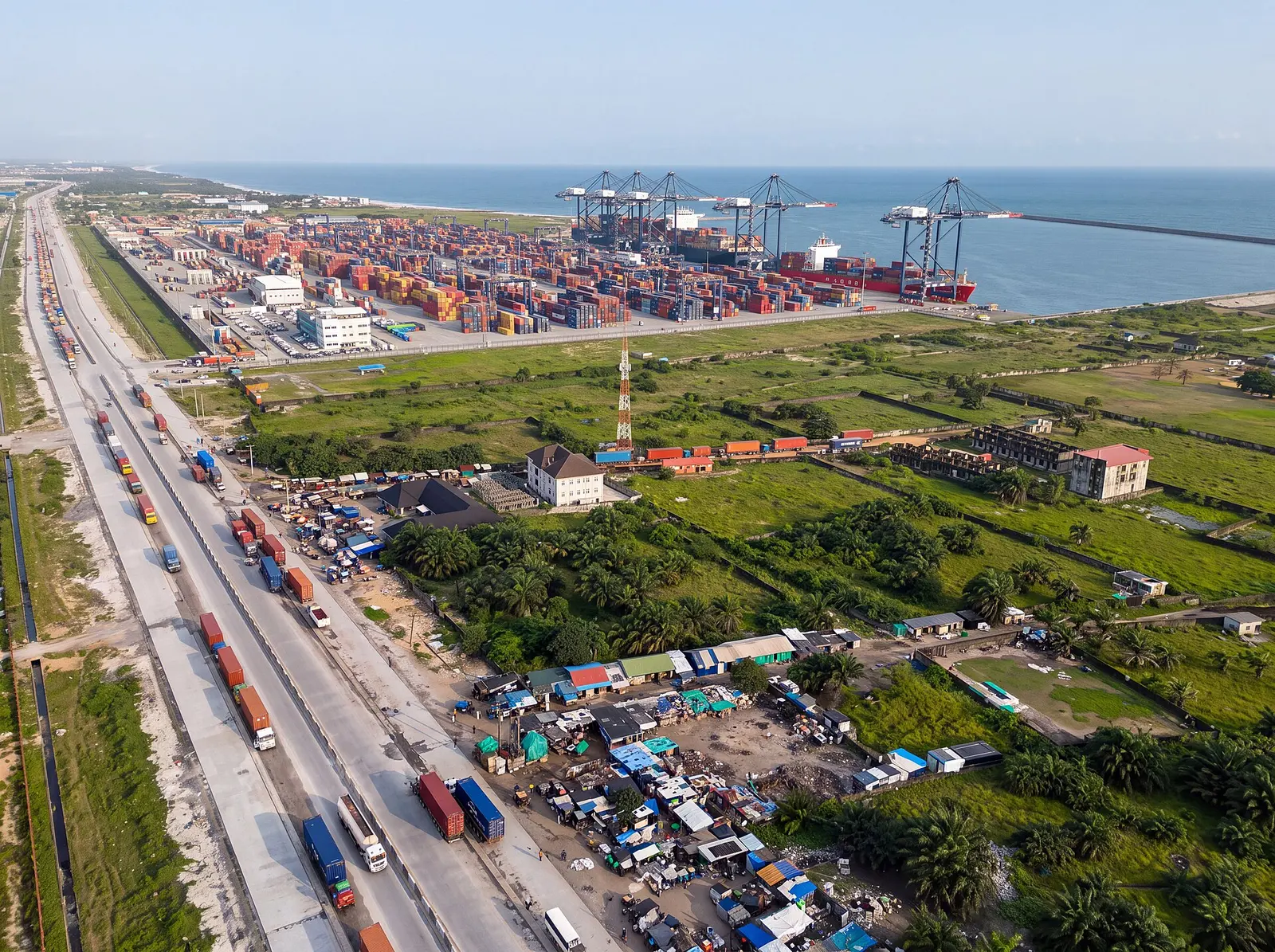

Nigeria ended the 2026 IMF and World Bank Annual Meetings in Bangkok, Thailand, by pitching 65 investment projects worth a combined $78.5 billion to global investors and setting a growth target of 7%, well above the International Monetary Fund's (IMF) forecast of 4.3% for 2027. Finance Minister Taiwo Oyedele said the economy is moving from stabilisation to acceleration and job creation, while Central Bank of Nigeria (CBN) Governor Olayemi Cardoso promised to stay the course on reforms. Here is what was offered and what to watch before any money arrives.
What Nigeria put on the table
The projects were presented at the Nigerian Investors Forum through a government "Deal Room" that gives investors project details, funding needs and direct access to officials. Capital needs range from $1 million to $15 billion per project, Leadership reported. Oyedele said the projects had gone through feasibility studies and were structured for private investors, both local and foreign.
| Sector | Projects | Capital needed |
|---|---|---|
| Oil, gas and power | 25 | $36.4 billion |
| Transport and maritime | 8 | $25.0 billion |
| Agriculture and agro-processing | 6 | $9.8 billion |
| Industry, manufacturing and mining | 17 | $6.6 billion |
| Technology, health and urban services | 9 | $0.7 billion |
| Total | 65 | $78.5 billion |
Energy and transport alone account for $61.4 billion, or about 78% of the total, by our calculation. The pipeline is top-heavy: 17 large projects need $72.3 billion, while 48 projects need less than $500 million each, including 29 below $100 million.
Named projects include Project Reliaxx, a $1.7 billion crude oil evacuation platform; the $1.29 billion Lagos Greenline Railway; a $2.69 billion ammonia and phosphate fertiliser plant; and a $355.6 million data centre powered by flared gas, Nairametrics reported from the government's investment portal. The government estimates the projects could create 366,763 jobs.
What investors are being offered
- 100% foreign ownership in most sectors.
- Full repatriation of capital and profits for investors with a Certificate of Capital Importation.
- 17 double taxation agreements and 13 bilateral investment treaties.
- A 5% annual tax credit on qualifying capital spending for five years under the Economic Development Incentive.
The 7% target versus the IMF
The IMF raised its 2026 growth forecast for Nigeria to 4.2% earlier this month and kept 2027 at 4.3%. Oyedele called those numbers conservative. "The projections of the IMF have always turned out to be too conservative. This year will not be different," he said, as quoted by Nairametrics.
To support the case, Oyedele cited second-quarter growth of 4.4%, four straight months of falling inflation, a tax-to-GDP ratio of 12.5% at the end of 2025 (up from about 7%), and public debt of about 36% of GDP. He said private capital inflows rose from about $300 million in 2023 to nearly $6 billion in 2026. Cardoso pointed to inflation of 14.63% in September, reserves above $55 billion and ₦4.65 trillion raised by banks in their recapitalisation.
The gap between 4.3% and 7% is large, which is why the project pipeline matters.
No return to fuel subsidies or multiple exchange rates
Both officials tried to reassure investors on policy consistency ahead of the next election cycle. "Let me be clear: there will be no return to fuel subsidies or multiple exchange rates," Oyedele said, according to ThisDay. He warned that reversing reforms could trigger capital flight and push the naira to ₦3,000 to ₦4,000 per dollar.
He also said NNPC's recent cut in its petrol retail margin was a time-bound commercial decision, not a subsidy paid for with public money. Cardoso said investors repeatedly asked whether Nigeria would keep its reforms, and that the answer was to "stay the course".
Cheaper loans are the real prize
Oyedele said businesses face lending rates close to 30%. His argument: if fiscal policy helps cut food, energy and transport costs, inflation can fall to single digits, opening the way for single-digit interest rates. With the CBN's policy rate at 23% and inflation at 14.63%, the real policy rate is still about 8.4 points, by our calculation.
The caveats
- Interest is not money. Oyedele himself cautioned that pledges from partners such as the World Bank, the European Union and the US Treasury should not be counted as inflows until agreements are signed.
- Questions on the external accounts. The opposition African Democratic Congress has asked the government to explain a $12.4 billion gap in Nigeria's external accounts flagged in the World Bank's October Nigeria Development Update, which the World Bank linked partly to oil export earnings not repatriated, ThisDay reported.
What this means for investors
- Energy and infrastructure lead. If even part of the pipeline closes, listed firms in power, oil and gas, cement and construction could benefit.
- Rates are the swing factor. Lower inflation and borrowing costs would help both companies and bond prices. Watch the next inflation data and CBN meetings.
- Policy continuity is priced in. Oyedele said markets expect reforms to continue. Any sign of a policy U-turn would be a key risk to watch.
This is for information only and is not investment advice.
FAQ
What is Nigeria's $78.5 billion investment pipeline?
It is a list of 65 projects in energy, transport, agriculture, industry, technology and health that the Federal Government presented to investors in Bangkok in October 2026, with capital needs from $1 million to $15 billion each.
What growth rate is Nigeria targeting?
The government is targeting 7% growth, compared with the IMF's projections of 4.2% for 2026 and 4.3% for 2027.
Will Nigeria bring back the fuel subsidy?
Finance Minister Taiwo Oyedele said there will be no return to fuel subsidies or multiple exchange rates, and described NNPC's recent price discount as a commercial decision, not a subsidy.
Sources
- The Sun, "FG unveils $78.5bn investment plan, targets 7% growth" (18 Oct 2026)
- Nairametrics, "Nigeria targets 7% growth, expects to outperform IMF's 4.3% forecast" (17 Oct 2026)
- Nairametrics, "Nigeria seeks $78.5 billion investment for 65 projects at IMF-World Bank meeting" (14 Oct 2026)
- Leadership, "Energy, transport to get 78% as Nigeria woos global investors for $78.5bn"
- ThisDay, "Oyedele: World markets have written off opposition, eyeing Tinubu's 2nd term" (18 Oct 2026)
- ThisDay, "Cardoso: We would stay the course on reforms to sustain investor confidence" (18 Oct 2026)
This note is for education. It is not a recommendation to buy or sell any share.
Tags: Economy, Investment, IMF, World Bank, Infrastructure