Economy
NGX Companies' Tax Bills Jump 71% to N4.52trn in 9M 2026
Lagos, 16 November 2026 · Gopexly Desk · Published 16 November 2026 at 06:00 · Updated 16 November 2026 at 08:37 · 6 min read
 ZENITHBANK
 GTCO
 SEPLAT
 ARADEL
 MTNN
 DANGCEM

Forty-one companies listed on the Nigerian Exchange (NGX) booked N4.52 trillion in income tax expense in the nine months to September 2026, up from N2.65 trillion a year earlier, according to a Nairametrics analysis of their unaudited results published on Monday. That is a rise of about 71%, in the first year of the Nigeria Tax Act 2025.
The same companies grew their combined pre-tax profit by 36%, to N11.88 trillion. Because tax rose faster than profit, the group's effective tax rate climbed to 38.1% from 30.3%. For shareholders, the message is simple: more of every naira of profit is now going to the government before it reaches dividends and retained earnings.
What the new tax law changed
The Nigeria Tax Act 2025 took effect on 1 January 2026. It did not raise the 30% headline company income tax rate. Instead, it made three changes that matter for listed companies:
- A 15% minimum effective tax rate for large companies. Firms that paid far below the headline rate, often because much of their income was exempt, now face a floor.
- A single 4% development levy on assessable profit. It replaces the 3% tertiary education tax and smaller levies for IT development, science and engineering infrastructure and the police trust fund.
- An end to the old turnover-based minimum tax. It was replaced by the 15% floor on profits.
Most of the rise is not from the new law
The Nairametrics analysis is careful to say the law explains only part of the jump. Of the N1.87 trillion increase in tax expense, higher profits account for about N947 billion. Higher tax rates explain the rest, and most of that came from one oil producer's acquisition rather than from the act.
| Company | 9M 2026 tax charge | 9M 2025 tax charge | Note |
|---|---|---|---|
| Seplat Energy | N987.1bn | N732.4bn | Rate fell to 74% from 83% |
| Aradel Holdings | N721.4bn | N55.6bn | Consolidated new onshore assets |
| MTN Nigeria | N630.5bn | Not stated | Charge up 68% |
| Dangote Cement (group) | N497.7bn | Not stated | Charge up 67%, rate 33.8% |
Aradel alone added about N666 billion to the group's tax bill. It began consolidating ND Western and Renaissance Africa Energy, which own the onshore oil fields it bought, and those fields pay hydrocarbon tax. Aradel's revenue grew more than sevenfold, to N3.95 trillion.
Seplat remains the single largest taxpayer in the group. Its effective rate actually fell, because most of its onshore assets moved to the Petroleum Industry Act's 60% hydrocarbon tax from the 85% petroleum profits tax, but a 53% rise in pre-tax profit pushed the charge higher.
Strip out the three oil producers and the picture is more modest. Tax at the other 38 companies rose 51%, to N2.82 trillion, while their profits rose 29%. Their effective rate rose to 28.8% from 24.6%. Nairametrics estimates that 4.2-point gap, worth about N412 billion, is the most the new law could explain, and it also includes one-off items.
Banks feel the 15% floor most
The clearest effect of the act is on bank earnings. Six lenders and holding companies booked N1.06 trillion in tax, up 40.5%, while their pre-tax profit rose 15.9%. Their combined effective rate rose to 26.4% from 21.8%.
Banks have long paid less than 30% because much of their income, including interest on some government securities, is tax-exempt. The 15% minimum now puts a floor under that.
- Zenith Bank: pre-tax profit rose 1.2% to N928.8 billion, but its tax charge jumped 65% to N253 billion, and net profit fell 11.6% to N675.8 billion. The charge includes N65.9 billion of minimum tax top-up, a N9.9 billion development levy and N89.9 billion for tax under-provided in an earlier period, which is unrelated to the act. Its effective rate rose to 27.2% from 16.7%.
- GTCO: pre-tax profit slipped 2.3% to N879.9 billion, tax rose 32% to N265.3 billion, and net profit fell 12.2% to N614.6 billion. The rate rose to 30.2% from 22.3%, including an N18.3 billion prior-year top-up.
- Access Holdings said it is now subject to the 15% minimum; its rate rose to 28.9% from 27.4%.
- First HoldCo was an exception. Its charge rose 54% to N166.6 billion, but pre-tax profit rose 61%, so its rate slipped to 18.3%.
Manufacturers pay more through the 4% levy
For manufacturers, the main new cost is the development levy, which in company filings is costing more than the levies it replaced. Seven consumer-goods makers booked N254.2 billion in tax, up 47%, on a 24% rise in pre-tax profit. Nestle Nigeria's rate rose to 46.7% from 43.4%, and International Breweries' rate rose to 39.7% from 22.1%, leaving its net profit 6% lower even though pre-tax profit grew 22%.
Not everyone has hit the floor yet. BUA Foods booked N30.1 billion of tax on N480.5 billion of pre-tax profit, a rate of 6.3%, and its earnings release does not explain how the 15% minimum applies to it.
The cash bill is still to come
Thirty companies that report cash taxes for both periods paid N3.02 trillion in the nine months, up 85% from N1.64 trillion. But Nigerian companies settle a year's tax after it closes, so most of that cash cleared 2025 profits under the old law. Those 30 companies paid out 69% of what they charged. Part of the gap is deferred tax, which may never be paid in cash; much of the rest is 2026 tax owed under the new rules and payable in 2027.
What it means for investors
The first-year lesson is that profit growth no longer passes straight through to shareholders. Zenith and GTCO both reported lower net profit on roughly flat pre-tax earnings. When comparing banks and manufacturers, investors may want to look at profit after tax and the effective tax rate, not only pre-tax profit.
Two caveats apply. The figures are unaudited nine-month numbers, and companies estimate interim tax at their expected full-year rate, so charges may change by December. The analysis also rests on a single source; we have not independently rebuilt the 41-company totals from each filing.
FAQs
Did the Nigeria Tax Act 2025 raise the company income tax rate? No. The 30% headline rate is unchanged. The act added a 15% minimum effective tax rate for large companies and a 4% development levy that replaces several older levies.
Why did bank tax bills rise faster than profits? Banks earn a lot of tax-exempt income, so they often paid well below 30%. The new 15% minimum puts a floor under their effective rate, and some banks, like Zenith, also booked one-off prior-year adjustments.
When will the government collect most of the 2026 tax? Mostly in 2027. Companies pay a year's tax after the year closes, so cash paid in 2026 largely settled 2025 bills.
Sources
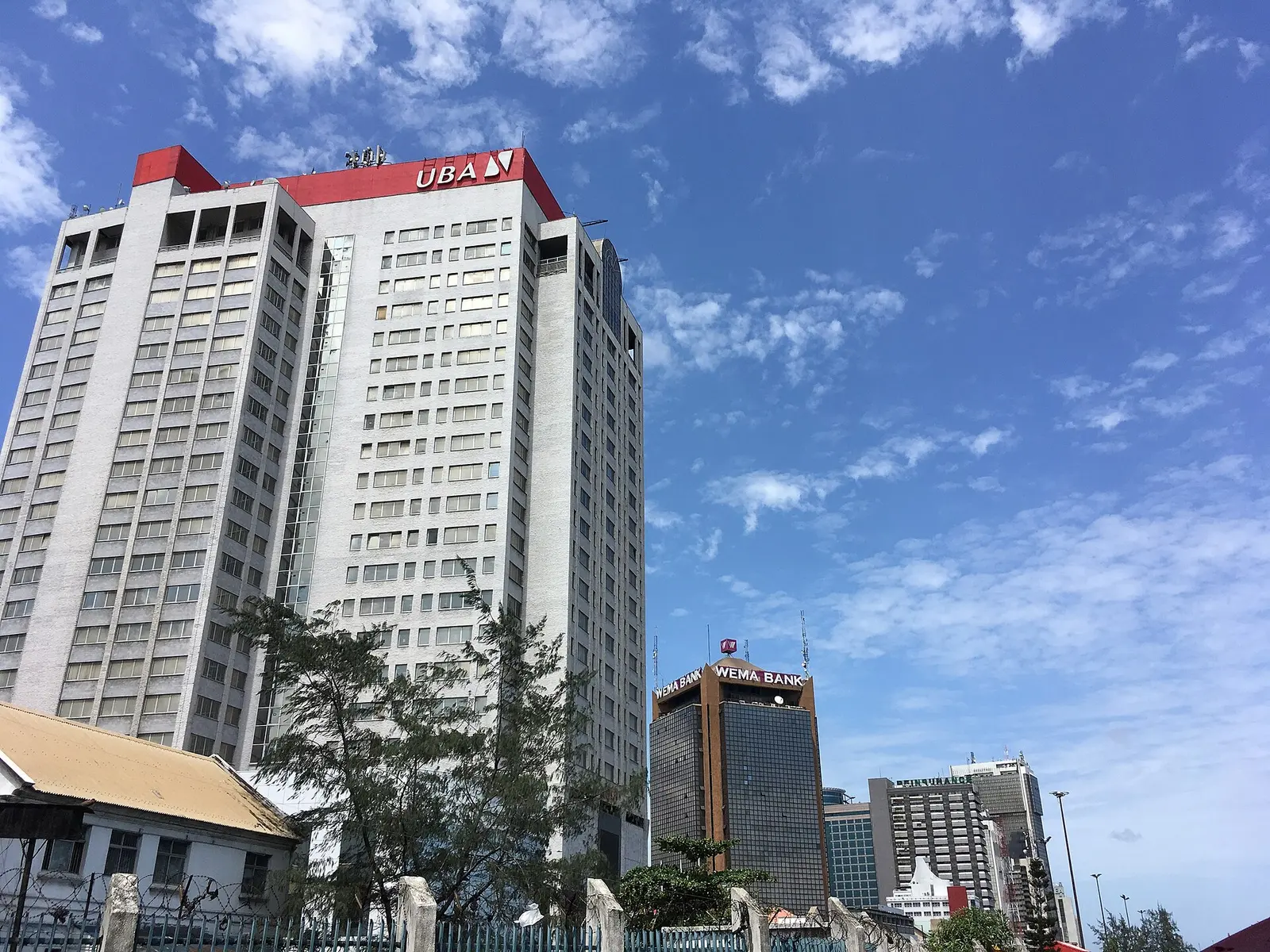
Cover photo: UBA, Wema Bank and other corporate buildings on Lagos Island. Olasunkanmiariyo / Wikimedia Commons, CC BY-SA 4.0.
This is for information only and is not investment advice.
This note is for education. It is not a recommendation to buy or sell any share.
Tags: Tax, Nigeria Tax Act, NGX, Banks, Earnings, Seplat, Aradel, MTN Nigeria